
From Arrest to Remand: Know What Comes Next
By Mehgalaa Rajendran – 16 January 2026
Being arrested is only the beginning of the process. After that, many people are unsure of what happens next. Words like “remand” and “court” are often mentioned, but rarely explained. This article breaks down what comes next, so you know what to expect and what rights protect you.
What Happens After You Are Arrested?
After an arrest, the police may take you to the police station for investigation. Within the first 24 hours, if the police find no case against you, you will be released. If there is sufficient evidence, the police may release you on bail (jamin mulut) based on your promise to attend court when required, or charge you the next day. When charged, you will be brought to court, where the charge will be read, and you will be allowed to enter your plea. However, if the police want to keep you beyond 24 hours, you must be brought before a Magistrate for a remand application. [See Article 5(4) of the Federal Constitution & Section 28(1) Criminal Procedure Code (“CPC”)]
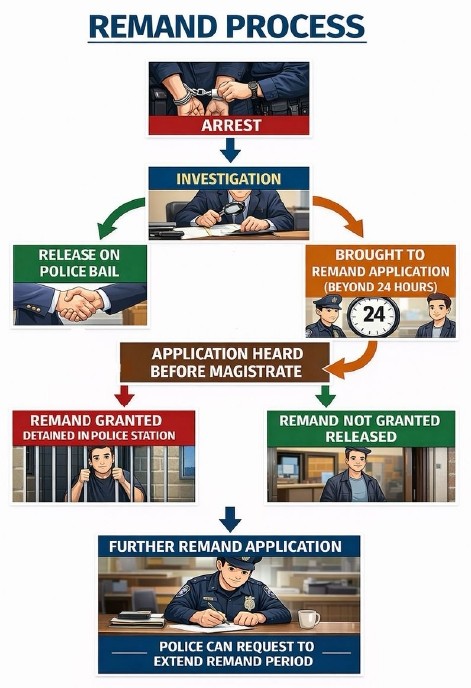
What Is a Remand Application?
A remand application is when the police ask the court for permission to detain you longer than 24 hours for further investigation.
The police cannot detain you just to take your statement as a witness. They may only detain you if you are a suspect in an offence and they have reasonable grounds to believe you have committed it. Mere suspicion is not enough to obtain a remand order. [See Section 117(1) CPC]
Your Rights During a Remand Hearing
If you are arrested and brought before a Magistrate for a remand hearing, you have the right to be represented by a lawyer. You might wonder, “Why do I need a lawyer?” Your lawyer can challenge the police’s request for remand or ask for a shorter detention. [See Section 117(5) CPC]
Having a lawyer is important to raise any mistreatment, health concerns, or other issues affecting your well-being. If these matters are brought to the court’s attention, the Magistrate can give additional directions. For example, the court may order medical treatment or allow the arrested person to lodge a police report if there are allegations of abuse.
How the Court Decides Whether to Allow Remand
When the police apply for remand, the court, in deciding whether to allow the remand, is guided to balance the accused person’s right to personal liberty against the public interest in ensuring that crimes are investigated effectively. [See In Re Syed Mohammad Syed Isa & Ors [2001] 8 CLJ 247]
If the Magistrate allows remand, the court must still decide how many days are actually necessary. In doing so, the Magistrate looks at the police investigation diary, which records the daily progress of the investigation, including the steps taken and what has been discovered. This helps the court determine whether further detention is truly justified. [See Section 119 CPC]
If remand is granted, the Magistrate must clearly state the reasons for allowing the remand. This ensures the decision is transparent, accountable, and can be reviewed later if necessary. [See Section 117(7) CPC]
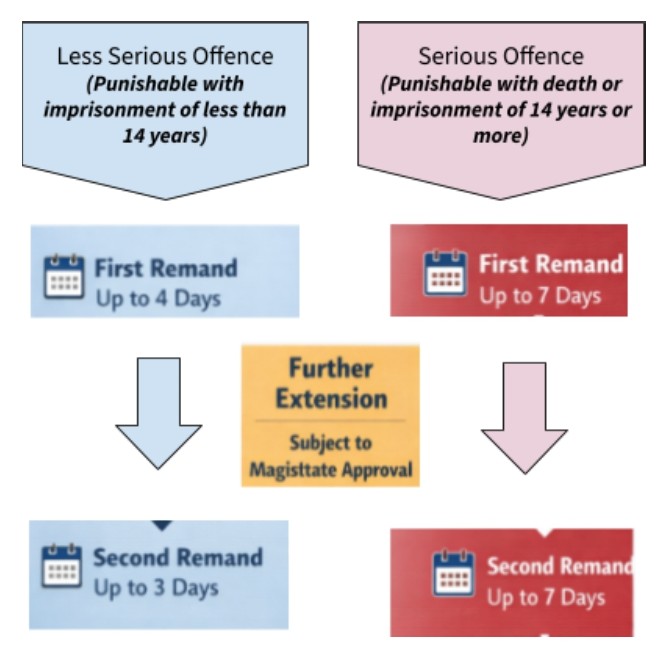
How Long Can Remand Be Granted?
The law sets limits on how long a person can be held on remand. If the investigation is not completed within the first remand, the police must apply again to the court for an extension, and the Magistrate will decide whether further detention is justified. The periods for which remand can be granted are shown in the diagram below.
Children on Remand
For children (under age of 18) who are arrested and detained, special protections apply. They should not be handcuff ed, and the police must make an eff ort to contact the child’s family as well as the probation off icer. It is important to ensure that these steps are followed. Children must also be kept separate from adult detainees, and the police should verify the age of anyone arrested to make sure that those under the age of 18 are placed in a separate cell. [See Section 83A and 85 Child Act 2001]
What Can Your Family Do?
Family members of accused persons play an important role after an arrest. They may help by contacting a lawyer as soon as possible, attending court during the remand hearing, and ensuring the arrested person’s welfare is looked after.
Staying informed and seeking proper legal advice early can make a significant difference during this stressful period.
Stay tuned: We’ll discuss bail and what to expect in the next article.
Note: This article does not constitute legal advice to any specific case. The facts and circumstances of each and every case will diff er and therefore will require specific legal advice. Feel free to contact us for legal consultation.