
Bail: What It Is and How It Works
By Mehgalaa Rajendran – 26th January 2026
Once an arrest leads to being charged in court, one question often raised is: “Can I get bail? Bail is not about escaping the case. It is about being released from custody temporarily while your case goes on in court. This article explains what bail is, who can get it, and what to expect.
What Is Bail?
Bail is the temporary release of a person who has been charged with a criminal offence,
pending trial. It may also apply when a person pleads guilty but the prosecution is not yet
ready with documents, such as case facts or chemist report, which the court needs to
consider before recording a conviction.
Is Everyone Entitled to Bail?
Bail is not automatically offered or granted. Eligibility for bail depends on the type of offence you have been charged with. There are three types of offences as follows:
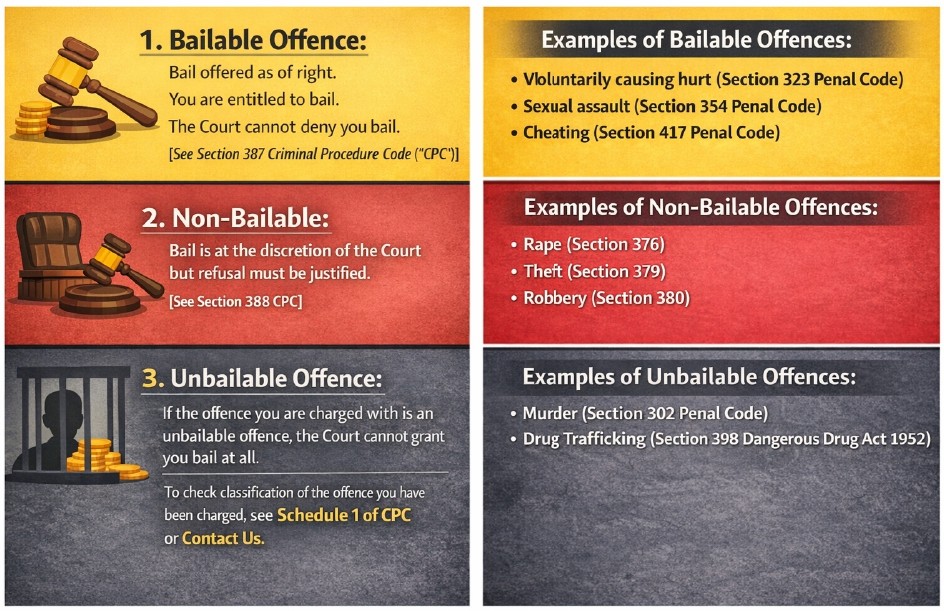
What Happens at a Bail Hearing?
Once you have been charged, the charge will be read out in court and you will be asked to enter your plea, essentially Guilty or Not Guilty. If you plead not guilty, what happens next depends on the type of the offence. For bailable offences, the Deputy Public Prosecutor will propose a bail amount together with the number of sureties required to ensure your attendance in court.
Your lawyer, on the other hand, will mitigate on your behalf and explains your personal circumstances and ask the court to lower the bail amount. The law is clear that a bail should not be excessive. It must be reasonable to ensure you attend court when required.
[See Section 389 CPC]
Why Legal Representation Is Important
In cases involving non-bailable offences, bail is not automatic and is granted only at the court’s discretion. Your lawyer plays a crucial role in showing why you should still be released on bail, including that you are not a flight risk, will not interfere with witnesses, and have strong family, work, or community ties. Without proper representation, these points may never be brought to the court’s attention.
How the Court Decides Whether to Grant Bail
When deciding whether to grant or refuse bail, the court may consider:
● Whether there are reasonable grounds to believe the accused is guilty
● The nature and seriousness of the offence
● The possible punishment if convicted
● The risk of the accused absconding
● The accused’s character, means, and social standing
● The risk of the offence being continued or repeated
● The danger of witnesses being intimidated or tampered with
● The opportunity for the accused to prepare their defence
● The length of time already spent in detention and any likely delay in trial
[See Public Prosecutor v Wee Swee Siang [1948] 1 MLJ 114]
Each case is different, and bail decisions are always based on the specific facts and circumstances of the case.
What Are Bail Conditions?
Bail usually comes with conditions such as:
● A bail amount to be paid to secure your attendance (money or bond)
● A surety (someone who guarantees you will attend court)
● Reporting to the police station
● Not contacting prosecution witnesses
● Surrendering passport
Bail for Non-Malaysians: What the Court Considers
Being a non-citizen does not automatically mean that bail will be refused. However, the court will examine such cases more carefully because of concerns about flight risk.
Nevertheless, the bail procedure remains the same as explained above. For foreign nationals, the court may consider these additional factors:
● Whether the accused has valid travel documents
● Whether they have a fixed address and employment in Malaysia
● Whether they have family or community ties in the country
● Whether there is a risk they may leave the country and not return for trial
If the accused is a non-citizen, the surety (bailor) must be a Malaysian citizen.
What Happens if You Breach Bail Conditions
If you are out on bail and breach any condition or fail to attend court, the court may forfeit your bail bond or require the surety to explain why it should not be forfeited. If your bail is canceled, a warrant of arrest will be issued.
Stay tuned: We’ll discuss what happens after you’re charged and how a criminal trial works.
Note: This article does not constitute legal advice to any specific case. The facts and circumstances of each and every case will differ and therefore will require specific legal advice. Feel free to contact us for legal consultation.